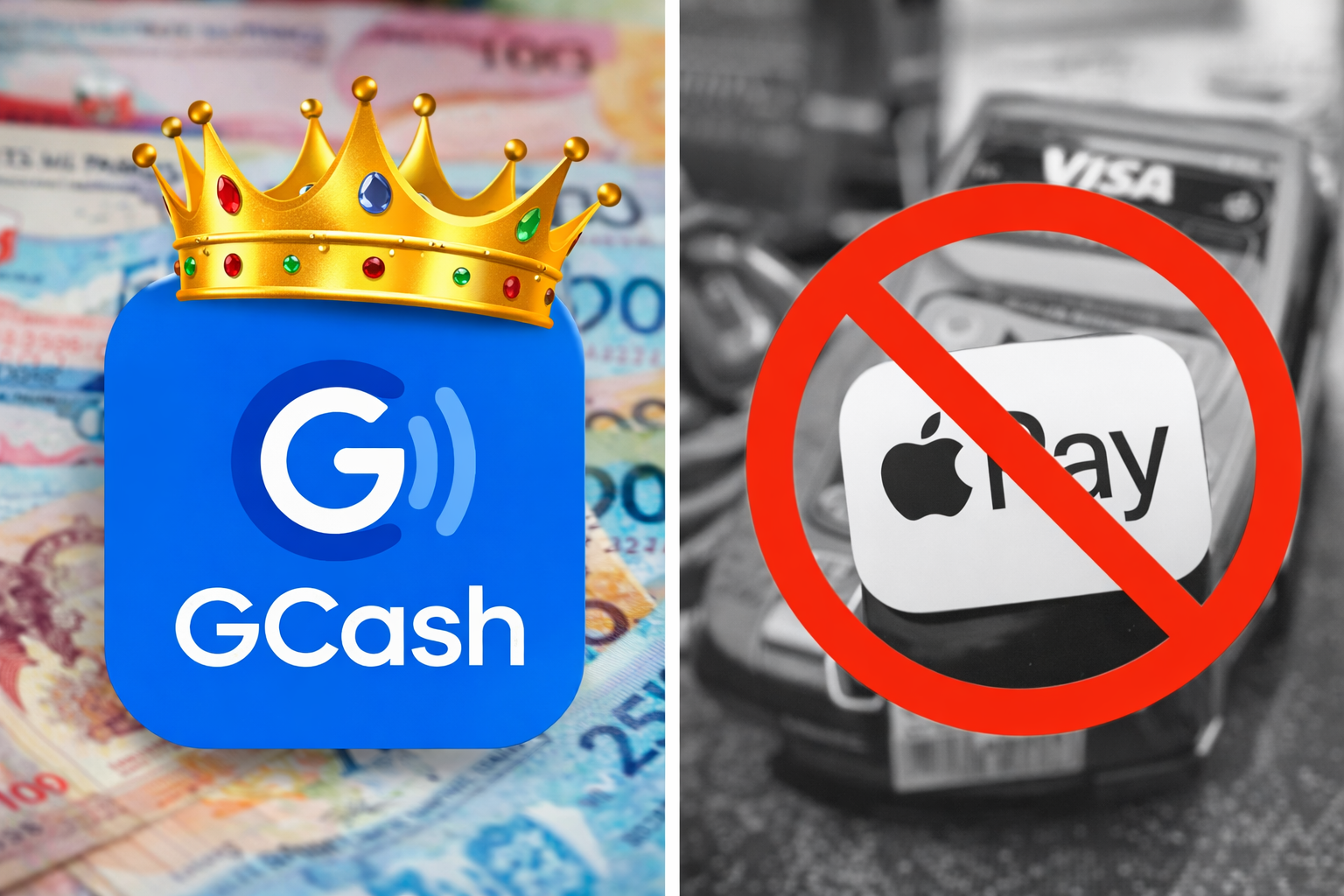
For many foreigners, one of the first surprises when arriving in the Philippines is discovering that Apple Pay and Google Pay are not available for everyday use.
In countries like the United States, Europe, or parts of Asia, contactless payments are standard. In the Philippines, however, the reality is very different. Instead of global payment platforms, daily transactions rely heavily on local mobile wallets—especially GCash.
This article explains why Apple Pay is still unavailable, why GCash dominates the market, and why many foreigners feel uncomfortable using it despite its popularity.
Apple Pay is not officially supported in the Philippines
The most important thing foreigners need to understand is simple:
Apple Pay is not officially supported by Philippine banks.
Apple Pay requires:
- partnerships with local banks
- NFC-enabled payment terminals
- regulatory and compliance alignment
- merchant adoption at scale
In the Philippines, these conditions are not fully in place.
Most local banks have not integrated their systems with Apple Pay, and many merchants still rely on older POS terminals that do not support contactless payments. As a result, even if your iPhone supports Apple Pay, you cannot use it reliably for daily transactions.
The Philippine payment ecosystem is bank-centric and fragmented
Unlike countries with unified payment infrastructures, the Philippine financial system is fragmented.
Key characteristics:
- Multiple banks with different standards
- Limited interoperability between systems
- Slow adoption of international payment platforms
Rather than integrating with Apple Pay, banks and regulators prioritized local solutions that work within existing infrastructure. This decision shaped the current payment landscape.
Why GCash became the dominant payment method
GCash succeeded not because it is perfect, but because it solved very specific local problems.
GCash allows users to:
- send money instantly to other users
- pay bills without visiting physical offices
- make small daily payments without cash
- transact without traditional bank accounts
For millions of Filipinos—especially those without full access to banking—GCash filled a critical gap.
GCash works where cards and Apple Pay do not
In practice, GCash works in situations where international payment methods fail:
- small stores and street vendors
- delivery services
- public transportation-related payments
- peer-to-peer transfers
Most of these environments:
- do not have modern POS terminals
- prefer QR codes over NFC
- prioritize low transaction costs
GCash fits these constraints. Apple Pay does not.
Why foreigners feel GCash is not secure
From a foreigner’s perspective, GCash often feels less secure than expected.
Common concerns include:
- phone number–based accounts
- SIM swap risks
- limited customer support responsiveness
- account freezes with slow resolution
- reliance on mobile devices for access
In countries with Apple Pay, users are accustomed to:
- hardware-level security
- biometric authorization
- strong dispute resolution
GCash operates under a different risk model.
Why Filipinos still trust and use GCash daily
Despite these concerns, GCash is widely trusted locally because:
- it is familiar
- it is accepted almost everywhere
- people understand its limitations
- users adapt their behavior to reduce risk
For example, many Filipinos:
- keep small balances only
- cash out frequently
- avoid storing large amounts
- use GCash as a “transaction tool,” not a bank
Foreigners often expect bank-level security from GCash, which leads to frustration.
GCash is a utility, not a savings platform
This is a crucial distinction foreigners often miss.
For most Filipinos:
- GCash is not a place to store money long-term
- it is a temporary payment channel
Once foreigners understand this, GCash usage becomes more logical and less stressful.
Regulation and adoption take time
Apple Pay’s absence is not due to technology alone. It also involves:
- regulatory approvals
- banking risk assessments
- merchant readiness
The Philippines moves cautiously in financial infrastructure changes. Adoption tends to favor locally controlled systems before global platforms.
This explains why:
- QR-based payments expanded faster
- local wallets scaled first
- international wallets lag behind
Will Apple Pay come to the Philippines?
Possibly—but not soon.
Apple Pay adoption requires:
- bank participation
- nationwide terminal upgrades
- merchant incentives
- regulatory alignment
Until those conditions change, GCash and similar platforms will remain dominant.
What foreigners should do instead
If you live in the Philippines, the practical approach is:
- accept that Apple Pay is not part of daily life
- use GCash for small, frequent transactions
- keep balances low
- rely on banks for savings
- carry cash as backup
This hybrid approach aligns with how the system actually works.
Final thoughts
The Philippines did not adopt Apple Pay because the local ecosystem evolved differently.
GCash became dominant not because it is the safest system, but because it fits local realities. Foreigners who understand this distinction adapt faster and avoid unnecessary frustration.
This site exists to explain those realities clearly—without hype, without assumptions, and without expecting the Philippines to work like other countries.