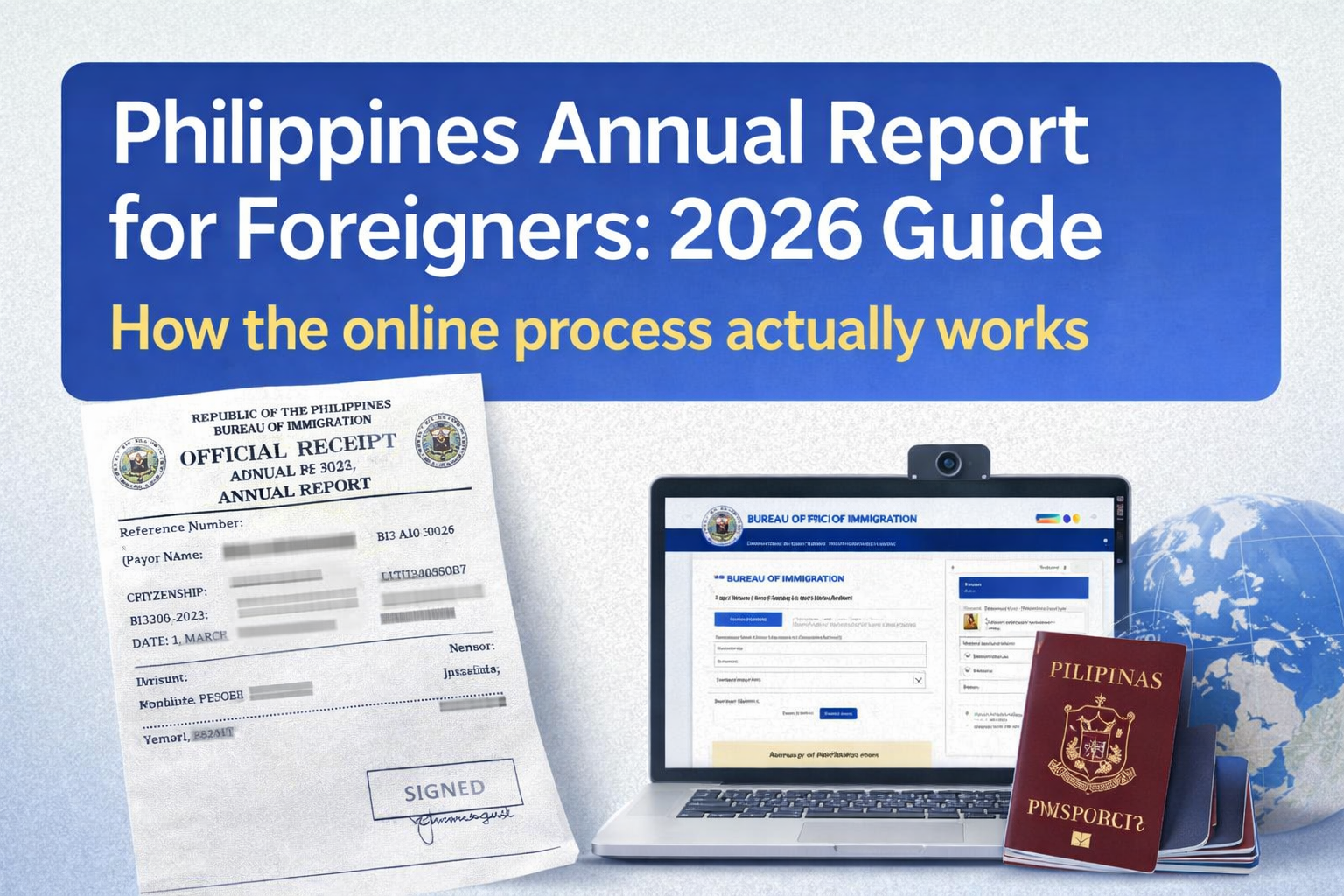
Every year, many foreigners living in the Philippines run into the same problem. They know they are required to complete the Bureau of Immigration Annual Report, but when they try to look it up online, the information feels confusing, fragmented, or incomplete. Some people find outdated articles. Others see old forum posts. Many search Google and still feel unsure whether what they are doing is correct.
This confusion is not caused by a lack of rules. It happens because the way the Annual Report is actually processed does not always match what foreigners expect from an “official” government procedure.
This article explains how the Annual Report really works in practice for foreigners in the Philippines in 2026, including why it can be done fully online, why you may not see a clear public link at first, and why the process can still be legitimate even if it feels informal by international standards.
What the Annual Report is and who needs to do it
The Annual Report is a legal requirement for registered foreign nationals living in the Philippines. It applies to foreigners holding valid visas and Alien Certificate of Registration (ACR) documents. The purpose is simple: to confirm that a foreign national is still present, documented, and compliant with immigration regulations.
Failing to complete the Annual Report can result in fines or issues with future immigration transactions, including exit clearance.
Why foreigners struggle to find clear information online
One of the most common frustrations is the lack of a single, clearly labeled public page explaining the process step by step. Many foreigners expect to find a dedicated “Annual Report 2026” page with a clear application button. In reality, the Bureau of Immigration often communicates requirements through official advisories and routes the actual process through its e-Services system.
Because of this structure, searching Google may not immediately show a clean, standalone page explaining everything. This does not mean the process is unofficial. It simply reflects how Philippine government systems are structured: announcements are public, while execution happens inside the portal.
How the online Annual Report process actually works
In practice, the Annual Report can be completed fully online for many foreigners. After accessing the Bureau of Immigration’s e-Services platform and registering, applicants may be guided through a verification process. In some cases, this includes a short online interview conducted through a video conferencing platform.
This interview is not an interrogation or a detailed examination. Its purpose is to verify identity, confirm visa status, and ensure the applicant matches existing records. Once verification is completed, the system provides an official payment channel.
After payment, an official receipt is issued by the Bureau of Immigration. This receipt is the most important proof of compliance and should be saved carefully.
Why a Google Meet interview can still be official
For foreigners unfamiliar with local procedures, a government interview conducted over a platform like Google Meet can feel unusual. However, this is part of the Bureau of Immigration’s effort to streamline processes and reduce in-person congestion.
The key point is not the platform used for the interview, but the outcome. If the process leads to official payment through authorized channels and results in an official Bureau of Immigration receipt, the transaction is legitimate.
In the Philippines, formality often lies in documentation rather than presentation. This is a cultural and administrative difference that many foreigners only learn through experience.
What actually proves that you completed the Annual Report
The definitive proof of compliance is the official receipt issued by the Bureau of Immigration. This document confirms that the Annual Report fee was paid and recorded under the applicant’s immigration profile.
Foreigners should keep this receipt accessible, as it may be requested during future immigration transactions, including visa extensions or exit clearance applications.
Common mistakes foreigners make with the Annual Report
Many problems arise not from the process itself, but from assumptions. Some foreigners delay reporting because they cannot find a clear public link. Others assume that if the process does not look formal enough, it must be unofficial. These assumptions often lead to unnecessary stress or last-minute complications.
Understanding that the Philippine immigration system relies heavily on official receipts and internal records helps clarify what actually matters.
What foreigners should remember going forward
The Annual Report requirement is real, enforceable, and recurring. The process may evolve year to year, and the public-facing information may not always be perfectly structured. This does not invalidate the procedure.
For foreigners living in the Philippines, the safest approach is to rely on official immigration portals, follow verification steps when required, and always retain proof of payment.
Final thoughts
The Philippine Annual Report process can feel confusing if you approach it with expectations shaped by other countries’ systems. Once you understand that announcements, verification, and execution may happen through different channels, the process becomes easier to navigate.
The key lesson is simple: focus less on how formal the process looks and more on whether it results in official documentation from the Bureau of Immigration. That is what ultimately matters.